Price monitoring
How to monitor your competitors' prices
Reading prices is easy. Reading the right ones, on the right products, often enough to react in time, is much harder. Here is a six-step method built for furniture sellers.
Key points
- Start with your best sellers and the five to ten competitors who share your customers, not with the whole catalog.
- In furniture, the hard part is not reading a price but knowing which product to compare: you need written equivalence criteria.
- Record the delivered price, the strikethrough price and the date, not just the displayed price.
- Monitoring only pays off if it leads to reaction rules agreed in advance.
Price is the most direct lever on margin. In a well-known study, Michael Marn and Robert Rosiello calculated that a 1% price improvement raised operating profit by 11.1% on average across the companies they analyzed, at constant volume[1]. The figure varies by industry, but the order of magnitude explains why a price gap spotted too late is expensive.
In furniture, monitoring competitors raises a specific problem: the same sofa almost never has the same name or reference from one site to the next. The method below takes that into account.
1. Decide what to monitor
Trying to track the whole catalog from day one is the surest way to track nothing. Start with three short lists.
- Your products. Best sellers, which make most of your revenue, and the traffic builders your customers compare most. Twenty to fifty products are often enough to start.
- Your competitors. The five to ten retailers who share your customers: the ones you meet on Google Shopping, on the marketplaces where you sell, and in your customer service notes.
- Your strategic families. The categories where you want to win market share, and the ones where you accept being more expensive.
2. Find the true equivalents
This step decides the quality of your monitoring. For each tracked product, you need to know what you are comparing. There are three levels:
- The same item, sold by another site, often under the same name.
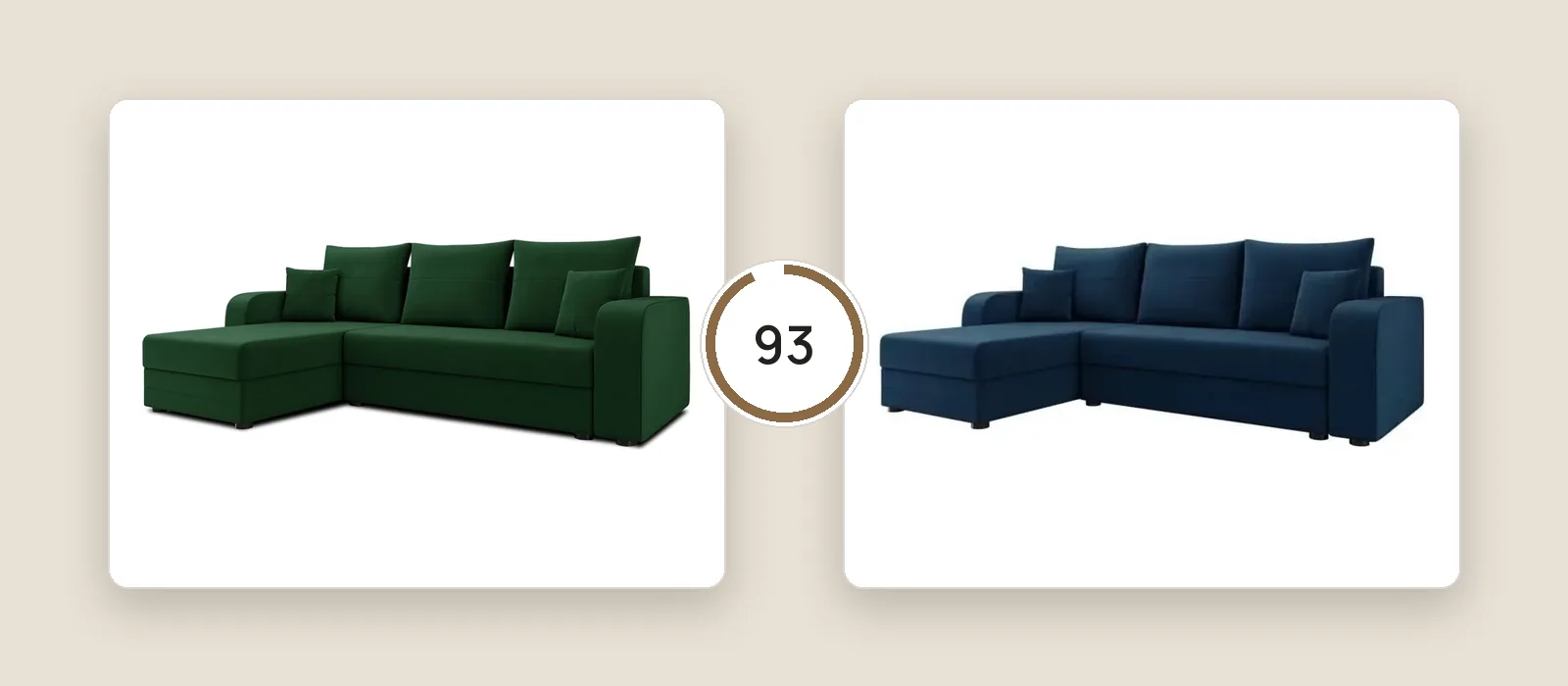
- The same model under another name, common in furniture: a manufacturer sells one sofa to several retailers, who rename it and change the photos.
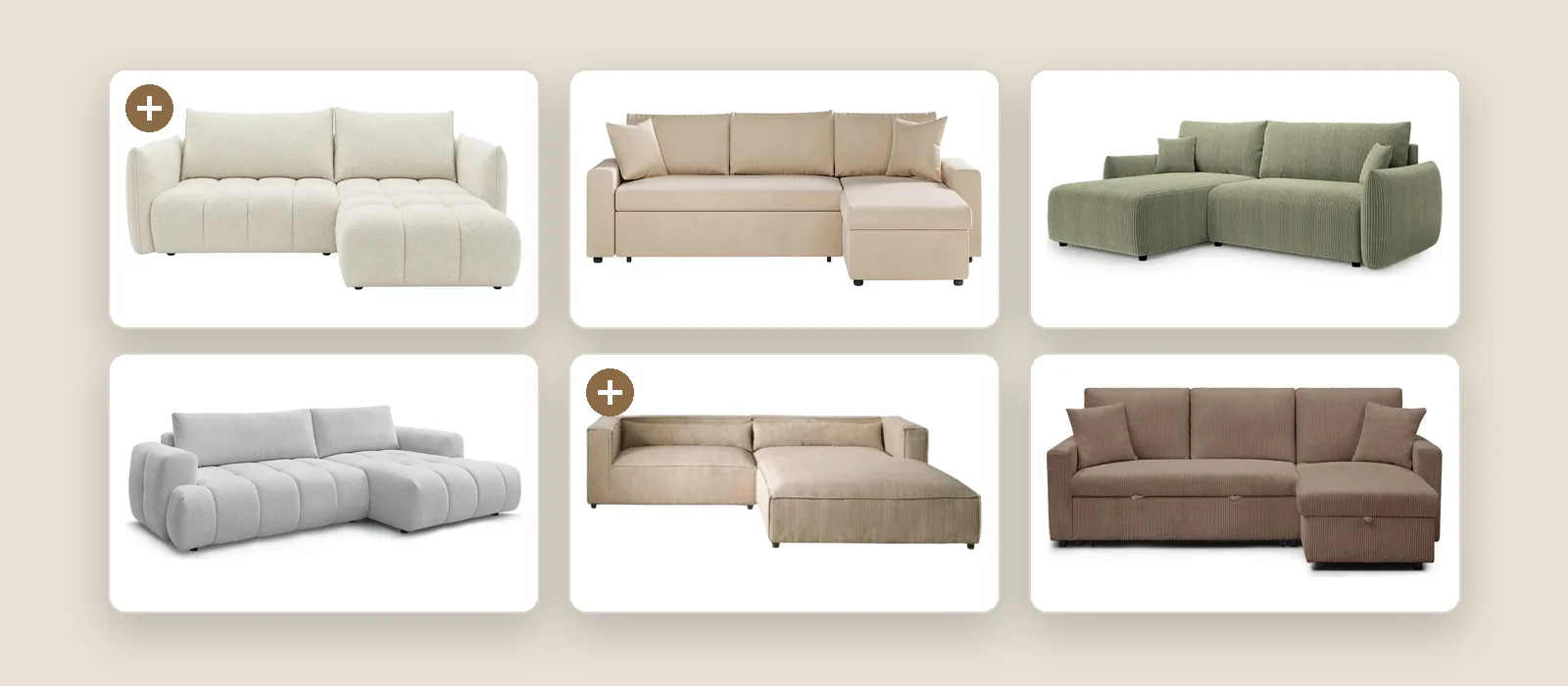
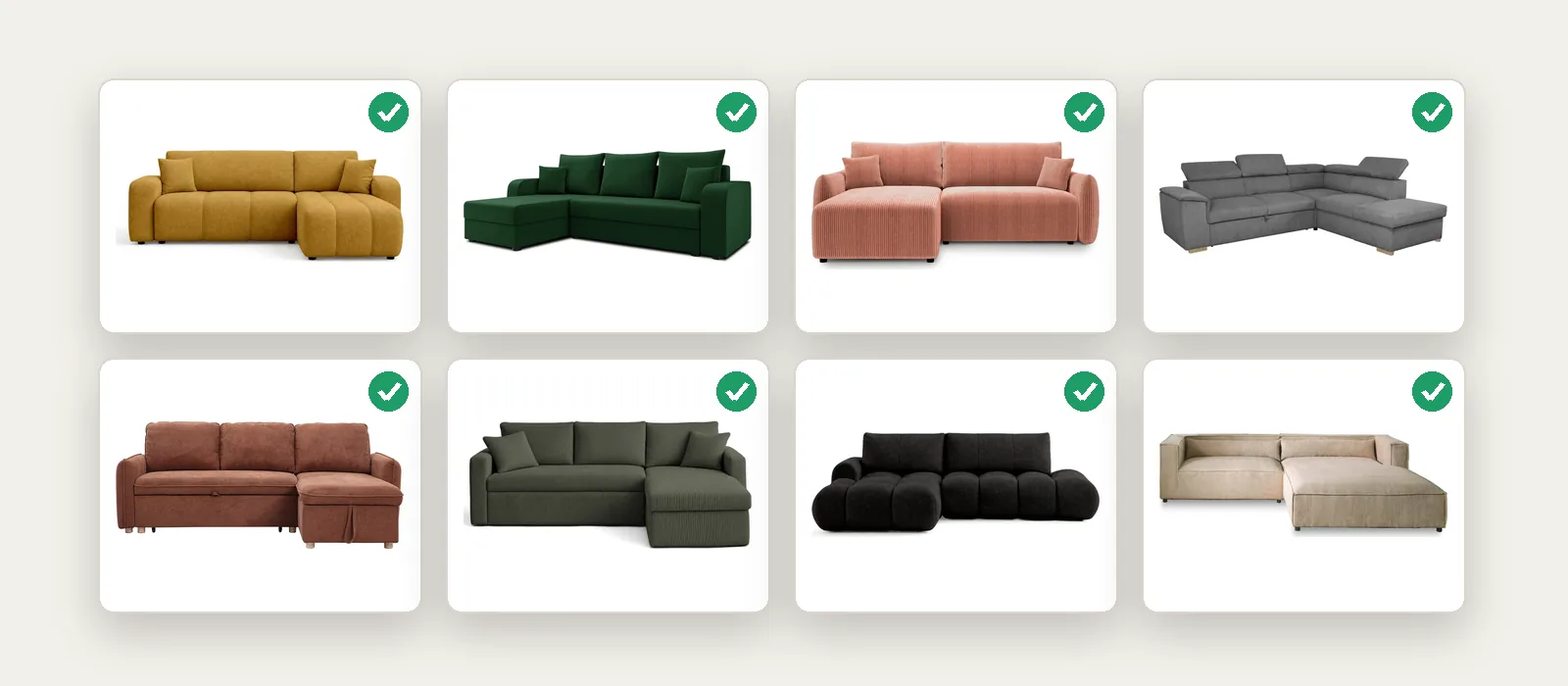
- The functional equivalent, which the customer compares in practice: same seat count, same dimensions within a few centimeters, same function (sofa bed, storage, reversible chaise), similar price range.
Write down your equivalence criteria and apply them to every pair. Without them, the price gap you observe mixes products that are not worth the same, and the decision that follows is wrong.
3. Choose the frequency
The right frequency depends on how fast your competitors move and how fast you can react.
| Products | Suggested frequency |
|---|---|
| Best sellers and traffic builders | Every day |
| Rest of the tracked catalog | Two to three times a week |
| During sales and Black Friday | Every day for everything on promotion |
A daily reading only makes sense if someone looks at the result every morning. Otherwise, a weekly reading that is actually used beats a daily table nobody opens.
4. Record the right price
The displayed price is not enough. For each reading, keep at least:
- the displayed price and, if there is one, the strikethrough price;
- delivery fees, which weigh heavily on bulky furniture and can change the whole ranking;
- availability and the announced lead time;
- the date and time of the reading.
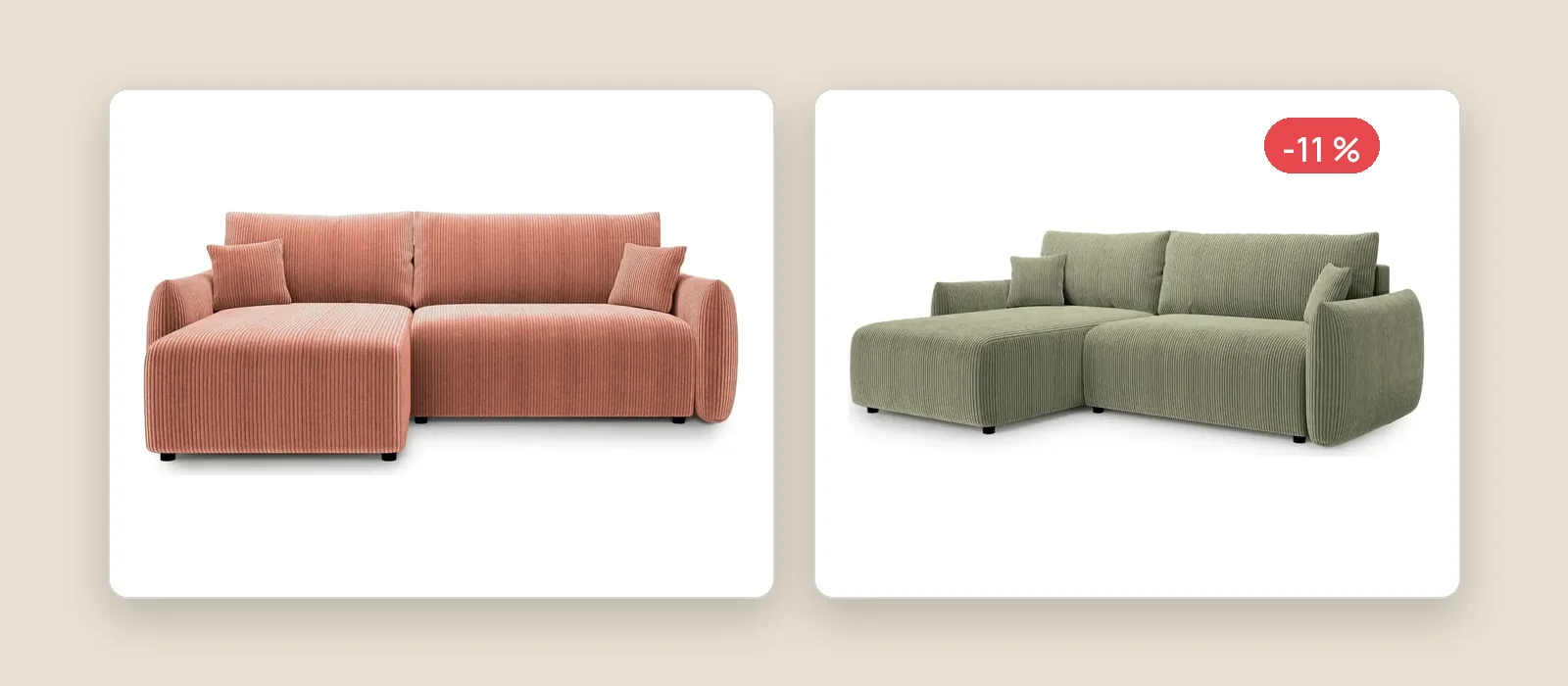
Strikethrough prices deserve special attention. In the European Union, any announced price reduction must show the prior price, meaning the lowest price applied during the 30 days before the reduction[2]. A clean price history lets you tell a real drop from a promotion that is not one.
5. Choose a collection method
Four approaches coexist, often within the same company.
- Manual readings in a spreadsheet. Free and accurate on ten products, unworkable beyond fifty. Typing errors and gaps creep in quickly.
- Reports from ad platforms. If you run Google Shopping ads, Merchant Center compares your prices with a benchmark computed from other merchants selling the same product[3]. It is useful, but limited to products with a shared identifier, which rules out much of the furniture market.
- In-house scripts. They give full control but need constant upkeep: every redesign of a competitor's site breaks the robot. At the very least, follow each site's robots.txt file, whose rules are now standardized[4], and keep request rates low.
- Monitoring software. It handles collection, product matching and history. In furniture, the deciding criterion is its ability to match products without a shared EAN code.
6. Turn readings into decisions
Price monitoring only creates value if it changes decisions. Set in advance:
- a position indicator per family, for instance the average gap to the cheapest competitor;
- reaction thresholds: beyond which gap you react, and on which products;
- alignment rules: match, stay a few euros or dollars above, or do nothing because the product sells on something other than price;
- a floor price per product, never to be crossed.
Look at your own price list too. A sofa priced above a better-equipped model from your own range is an inconsistency a customer will notice before you do.
The most common mistakes
- Comparing products that are not equivalent, for lack of written criteria.
- Forgetting delivery fees, which often amount to tens of euros on a sofa.
- Reacting to a forty-eight-hour promotion as if it were a lasting drop.
- Keeping only the latest price, with no history.
Good price monitoring comes down to a few things: a short list of products and competitors, clear equivalences, regular and dated readings, and reaction rules decided before you need them.
Sources
- Michael V. Marn and Robert L. Rosiello, Harvard Business Review, “Managing Price, Gaining Profit”, September-October 1992. hbr.org/1992/09/managing-price-gaining-profit
- Official Journal of the European Union, EUR-Lex, “Directive (EU) 2019/2161 of 27 November 2019 (the “Omnibus” Directive)”, 18 December 2019. eur-lex.europa.eu/eli/dir/2019/2161/oj
- Google Merchant Center Help, “About Pricing in Merchant Center Analytics”. support.google.com/merchants/answer/9626903
- IETF, RFC Editor, “RFC 9309, Robots Exclusion Protocol”, September 2022. www.rfc-editor.org/rfc/rfc9309.html